
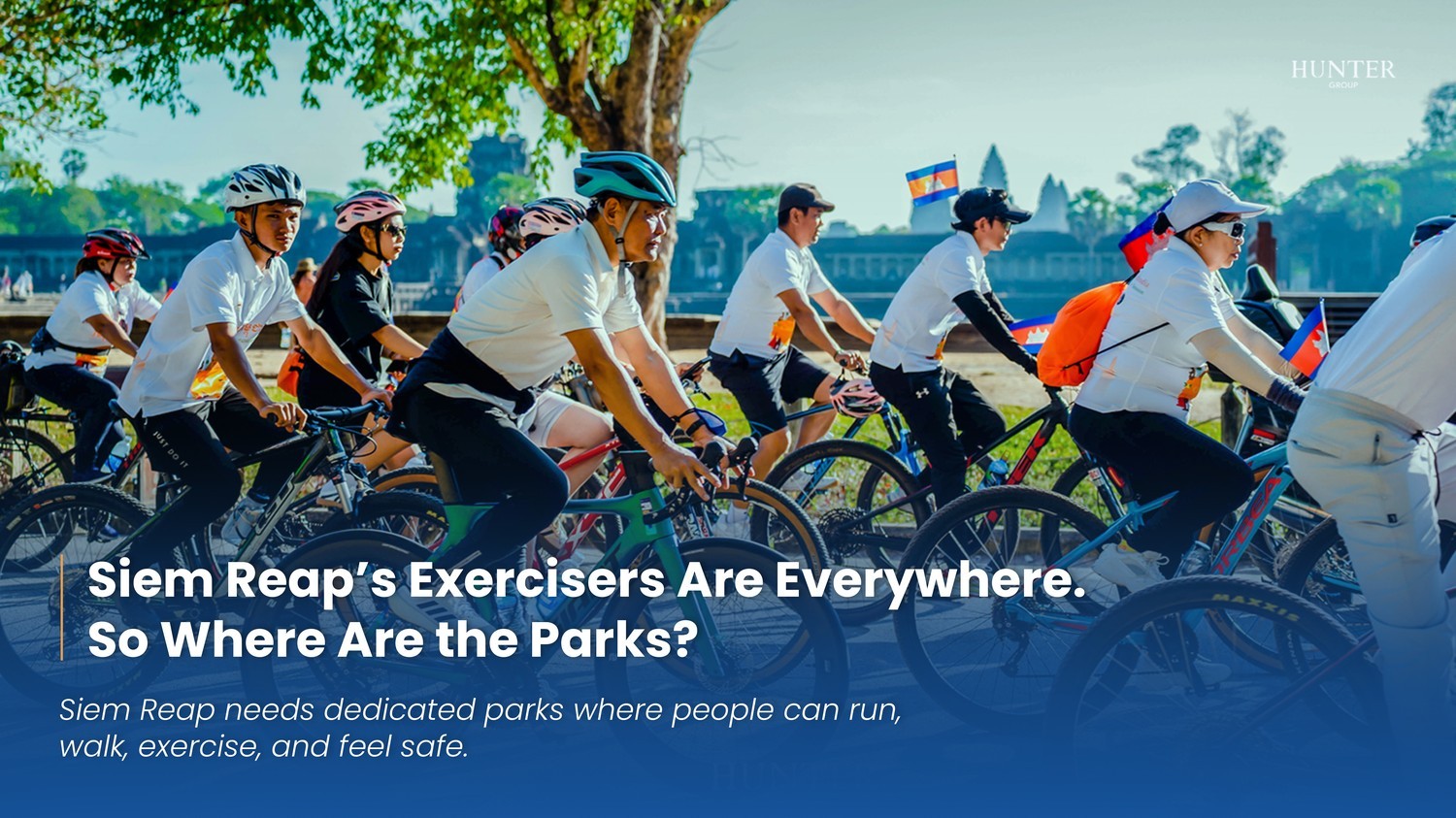
Siem Reap’s Exercisers Are Everywhere, But Where Are the Parks?
If you walk along the Siem Reap River in the evening, especially around sunset, it is hard not to notice how many people are out exercising. Some are running, others are walking or cycling. Groups of friends and families are also using the riverfront to unwind after a long day.
It is a small but noticeable change in how people are using the city. As more residents become interested in health and fitness, outdoor exercise is becoming part of everyday life in Siem Reap. Yet when you look at where people can actually go, the options are still fairly limited. For many residents, the riverfront is one of the few convenient public spaces where they can walk, run, or exercise without having to pay for a gym.
So, what if Siem Reap had a proper public park designed around the way people actually want to spend their free time?
A place with walking and cycling paths, outdoor exercise areas, plenty of shade, and open spaces for families and communities to gather. It does not need to be extravagant. It simply needs to be well planned, accessible, and comfortable enough for people to want to use regularly.
Looking at What Other Cities Are Doing
There are plenty of examples across Southeast Asia of how public parks can become part of everyday city life.
In Hanoi and Ho Chi Minh City, parks are a normal part of the daily routine. People use them early in the morning, after work, and throughout the weekend. They exercise, meet friends, or simply spend some time outdoors. What stands out is that these spaces are designed around how people use them. They are more than just green areas between buildings.
Kuala Lumpur has also invested in parks and recreational areas with walking and cycling paths. These spaces encourage people to spend more time outdoors, while also bringing activity to the neighborhoods around them. When people spend more time in an area, nearby cafes, restaurants, and other businesses can benefit too.
Singapore takes this idea even further by connecting green spaces, walking and cycling routes, and natural areas across the city. Some serve environmental purposes while also giving people places to exercise and spend their free time.
Siem Reap does not need to become any of these cities. But there is something worth learning from them: good public spaces can become an important part of everyday life when they are designed around the people who use them.
What Could This Mean for Siem Reap?
The city is changing. It is no longer enough to think of Siem Reap only as a place people visit for Angkor Wat. It is also a place where people live, work, raise families, start businesses, and spend their weekends. As that side of the city grows, the things people need from their surroundings will change too. A public park may seem like a small part of that bigger picture, but its impact could go well beyond giving people somewhere to exercise.
For residents, it could provide a free and accessible place to walk, run, cycle, or spend time with family.
For visitors, it could offer another way to experience Siem Reap beyond the temples and traditional tourist attractions. A place to take a morning walk, rent a bicycle, sit under a tree, or simply spend some time outdoors.
For businesses and developers, a well-maintained public space could make a neighborhood more attractive and bring more regular activity to the surrounding area. We already understand the value of being close to good roads, schools, restaurants, and commercial areas. Could access to quality public space become part of the value of a neighborhood too?
A park does not have to be a commercial development to have an economic impact. People who spend time there may also visit nearby cafes, restaurants, shops, and wellness businesses. There is also a practical side to this. Siem Reap is hot for much of the year, so shade and trees matter. More green and permeable areas could also help with cooling and rainwater management.
With the right planning, public and private sectors could potentially work together to create and maintain these spaces. Developers, businesses, and local authorities could each play a role in making them useful for the wider community.
It Is Also About the City We Want to Live In
Siem Reap has done an incredible job establishing itself as a global tourism destination. The next challenge is making sure it is also a comfortable and enjoyable city for the people who live here.
The people exercising along the river every evening are already showing us that there is demand for more outdoor space. Perhaps the question now is whether the city can create public spaces that give that demand somewhere better to go. Because if Siem Reap is going to continue growing, we should not only ask what we can build for people to visit.
We should also think about where people will walk, exercise, meet, relax, and simply enjoy living here. And maybe public parks are not a luxury, but a part of what a growing city needs.