
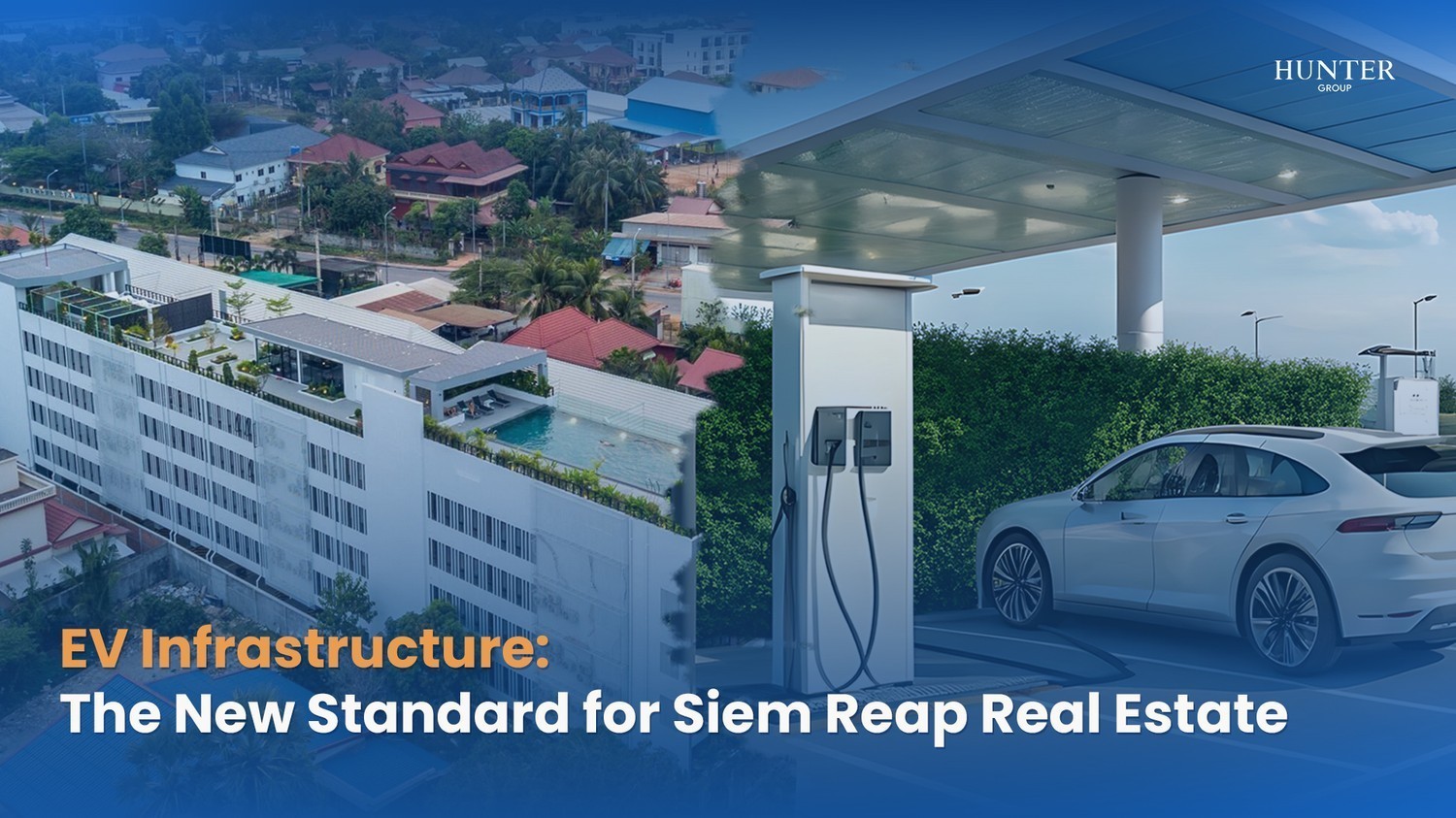
EV Infrastructure: The New Standard for Siem Reap Real Estate
With gas prices currently set at 5,400riels per liter, the landscape of mobility in Siem Reap has shifted. The silent hum of electric motors is replacing the roar of combustion engines. What began as a niche trend of colorful e-bikes has matured into a structural shift. BYD cars and electric tricycles are now integrated into the city’s daily flow.
For strategic investors, this isn't just a change in mobility. It is a signal that an infrastructure gap is currently redefining what "prime" land actually means.
1. The Acceleration Away from Combustion Energy
The catalyst for this change is no longer just going green. It is economic survival. As of March, 2026, fuel prices have reached a breaking point, with regular gasoline at 5,400 riels and diesel at 6,400 riels per liter.
This price shock has triggered a mass migration toward electric mobility. While registrations surged to nearly 13,000 units by the end of last year, our physical infrastructure is lagging. With approximately 11 public charging stations across the city, the first-mover advantage for developers is no longer a marketing slogan. It is a race for energy-ready land.
2. Strategic Value Drivers
The current evaluation of the EV investment landscape centers on three primary pillars of operational efficiency and asset positioning, based on current market pricing.
• The 70% Operational Edge: At 1,350 riel/kWh for DC charging, running an EV shuttle is 70% cheaper than diesel. A boutique hotel in Wat Bo or Sala Kamreuk that offers integrated charging significantly reduces operating costs.
• Secondary Revenue Streams: In high-traffic areas, EV chargers transform a hotel or supermarket parking lot into active revenue points. Electric taxis and tuk-tuks regularly pay per session, effectively converting underutilized space into a steady, low-maintenance income stream.
• Future-Proofing for 2030: With a national goal of 770,000 EVs by 2030, the demand is only moving in one direction. For Borey developments in Svay Dangkum, providing standardized home-charging is a powerful way to stand out in a competitive market.
3. The New Prime Location: Power Capacity
The old rules of "location, location, location" are evolving. Today, a plot’s value is increasingly tied to how much power it can pull from the street. Certain areas are now better positioned for the EV shift:
1. Primary Commercial Artery (National Road 6)
• Location: Sla Kram & Svay Dangkum frontage.
• Price Range: $800 – $1,200/sqm.
• Best Use Case: Maximum visibility for inter-city transit, flagship hospitality, and high-capacity retail. This is the city’s primary economic link.
2. Strategic Logistics Corridor (The Ring Road)
• Location: Arterial segments of Chreav & Svay Dangkum.
• Price Range: $150 – $2,000/sqm.
• Best Use Case: A dedicated bypass for heavy logistics and industrial fleets. Price variation is primarily driven by proximity to major intersections and "last-mile" distribution nodes.
3. High-Density Urban Core (Sala Kamreuk & Sla Kram)
• Location: Established residential and tourism clusters.
• Price Ranges: $250 – $1,200/sqm.
• Best Use Case: High-density zones optimized for boutique hospitality, premium residential developments, and urban EV charging for passenger fleets.
4. Navigating the Growth
Every major shift has its learning curve. To ensure a smooth rollout, investors focus on coordinating with the local landscape, including:
• Grid Planning: Access to grid capacity is only the first step. To move quickly, check the local transformer’s headroom early so you can plan for any necessary power upgrades in coordination with the utility providers.
• Staying Current with Policy: The government is actively refining EV standards and regulations to ensure safety and sustainable growth. Keeping your equipment adaptable ensures your station stays ahead of new national guidelines as they evolve.
• Building Local Expertise: EV infrastructure requires specialized maintenance capabilities. Forward-thinking investors are already building relationships with specialized technicians to ensure their infrastructure is always running at peak performance.
• Timeline Management: Because this is a new sector, the regulation for permits can take a little extra time. Factoring this into your project schedule ensures a stress-free launch without rushing the process.
5. The Legal Roadmap to EV Infrastructure
To launch an EV charging business in Cambodia, there is a clear two-step process to follow. Getting this right from day one ensures your investment is legally protected.
• Development Permit: First, investors must obtain the development permit from the Ministry of Mines and Energy. The MME reviews the development construction plans, site safety, and technical specs. This grants the legal right to build and install the charging equipment.
• Service License: Once construction is finished, investors can apply to the Electricity Authority of Cambodia for a service license, allowing the charging station to legally bill customers and ensure it operates at the national capped rates (1,350 riel/kWh benchmark).
This two-step structure reflects Cambodia’s effort to regulate EV infrastructure safely while encouraging private investment.
Conclusion
In a city moving toward wellness and intentional growth, power capacity is now a primary driver of property value. At Hunter Group, we identify and secure assets positioned for this transition before the market fully prices them in. From site selection to feasibility assessments, we ensure your entry into the Siem Reap market is strategic and seamless.
By Sreyneth Kem
Project Marketing & Communication