
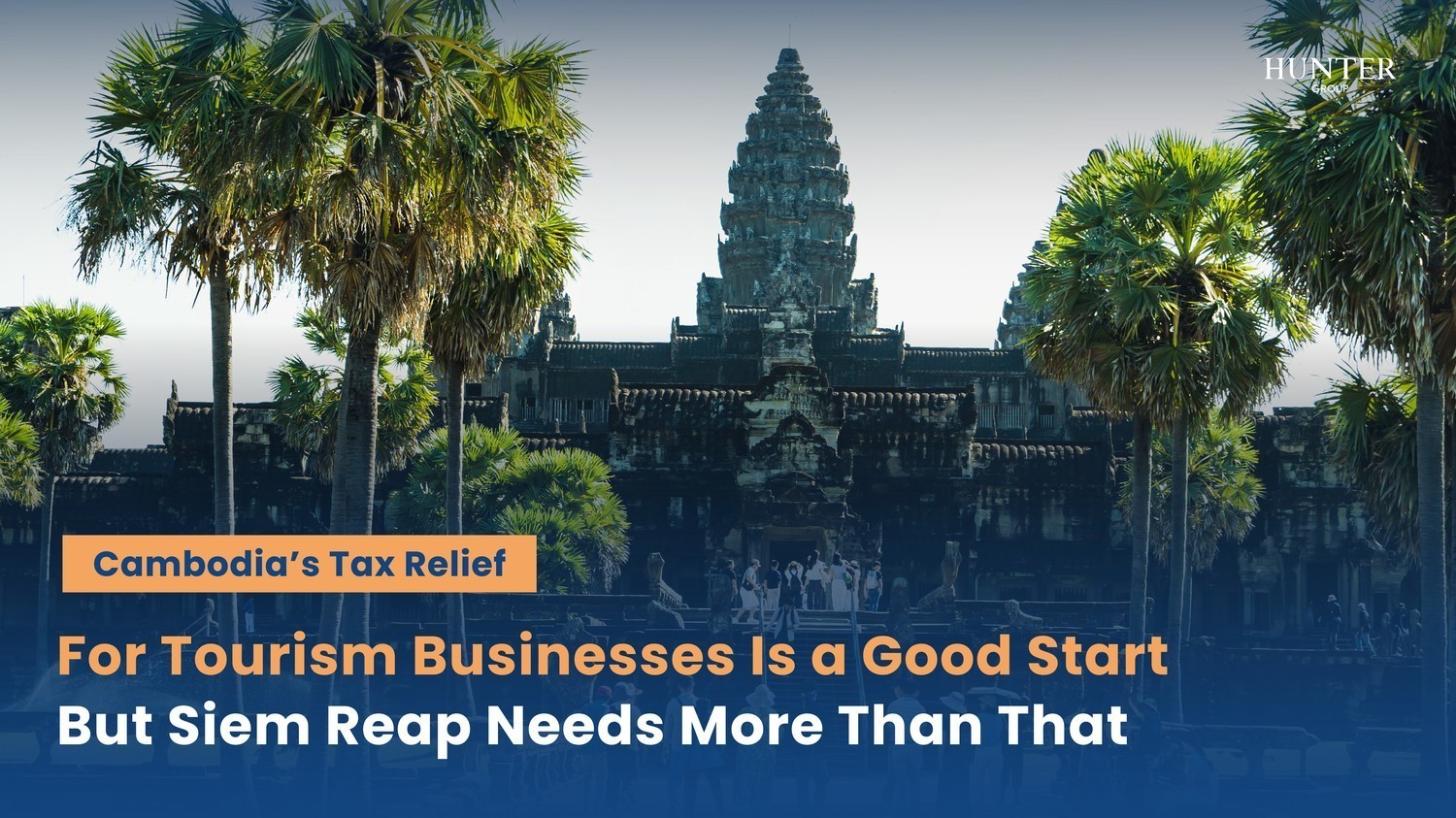
Cambodia’s Tax Relief for Tourism Businesses Is a Good Start — But Siem Reap Needs More Than That
The government has implemented tax relief for tourism businesses in Siem Reap, effective from January to December 2026, to ease the burden on hotels, guesthouses, restaurants, and tourism-related businesses struggling with declining visitor numbers.
While the approach provides temporary breathing room for businesses, a far more proactive and long-term strategy is needed to revive the tourism sector.
According to data from Mekong Strategic Capital, visits to the Angkor Archaeological Park in April 2026 remained 72% below pre-pandemic levels, falling from 185,405 visitors in April 2019 to just 51,093. Arrivals from South Korea were down nearly 96%, while Malaysian visitor numbers had declined by 87%.
The figures highlight a broader challenge. The tourism recovery is no longer just about increasing visitor numbers; It is about creating a compelling destination that stands out in an increasingly competitive regional market. Modern travelers are no longer searching only for destinations to visit, but for places that make them truly feel something.
• Rebuilding Demand Starts with Global Visibility
Across the region, destinations are competing aggressively for international travelers through airline partnerships, destination marketing campaigns, digital storytelling, and major events. Countries are investing heavily to remain visible in an increasingly crowded tourism market.
Siem Reap cannot rely solely on the global recognition of Angkor Wat.
Expanding international flight connections, strengthening tourism partnerships, and increasing Cambodia's presence across digital platforms should become key priorities. Strategic collaborations between airlines, tourism authorities, travel platforms, and content creators can help keep Cambodia on the radar of global travelers.
The recent marketing partnership between Singapore Airlines and the Cambodia Tourism Board is an encouraging step in that direction. More initiatives like this will be needed to sustain long-term growth.
Before travelers can experience what Siem Reap has to offer, they need a reason to add the city to their shortlist.
• The Rise of Wellness and Slow Tourism
One of Siem Reap's greatest opportunities lies in a global trend already reshaping tourism: the demand for wellness and slow travel experiences. Unlike destinations built around shopping districts, nightlife, and fast-paced itineraries, Siem Reap offers something increasingly difficult to find: a space to slow down.
The city's greenery, boutique hospitality scene, wellness retreats, nearby natural attractions, and deep cultural heritage create an environment that encourages visitors to disconnect from daily pressures and reconnect with themselves.
Increasingly, travelers are seeking destinations that improve how they feel rather than simply giving them more places to see. According to Agoda's latest travel trends report, more than 62% of travelers are actively seeking restoration-focused experiences. Siem Reap is already well-positioned to benefit from this shift through wellness retreats, eco-tourism, farm-to-table dining, nature-based activities, and longer-stay experiences that generate greater local economic value.
Rather than marketing the city solely as the home of ancient temples, Siem Reap has an opportunity to position itself as a destination for restoration, culture, and meaningful travel.
• “Life Hurts, Siem Reap Heals” — Our Soft Power Opportunity
In recent years, the phrase “Life Hurts, Siem Reap Heals” has gained popularity across social media and amongst local Generation Z. For many, the phrase captures something powerful about the city’s identity. It reflects how visitors emotionally experience Siem Reap; not simply as the home of Angkor Wat, but as a place of comfort, healing, and reconnection.
In an era where emotional connection increasingly drives travel decisions, this perception has real value. The strongest tourism brands are not built solely on landmarks. They are built on feelings.
Rather than relying exclusively on traditional tourism campaigns, Cambodia should embrace digital storytelling that highlights authentic local experiences, creative communities, café culture, personal journeys, and the everyday moments that make Siem Reap unique.
• Make Culture the Center of the Experience
Culture itself must become a core tourism experience rather than simply a performance attached to tourism.
Cambodia’s cultural richness extends far beyond the traditional Apsara dance. From Khmer architecture and local craftsmanship to culinary traditions, contemporary art, storytelling, traditional music, and village-based experiences, Cambodia possesses an authenticity that many travelers today actively seek.
Visitors increasingly want immersive experiences that allow them to engage with local life in meaningful ways. This could include workshops with artisans, local cooking experiences, cultural festivals, artist residencies, heritage cafés, and creative spaces that showcase modern Cambodian identity alongside tradition.
Places like Brown Mao Tse Tung illustrate this opportunity well. By transforming a residence designed by legendary Cambodian architect Vann Molyvann into a contemporary café and cultural space, the project demonstrates how heritage can be preserved while remaining relevant to modern audiences. Tourism is strongest when culture is not simply observed but experienced.
A Long-Term Vision Beyond Tax Relief
Tax relief may help businesses weather difficult conditions, but it is not a strategy for long-term tourism growth.
The future of Siem Reap depends on rebuilding international demand, strengthening global visibility, investing in meaningful experiences, and developing a tourism identity that extends beyond Angkor Wat.
The city already possesses qualities that many destinations spend years trying to manufacture: authenticity, emotional connection, cultural depth, and a genuine sense of peace.
The question is no longer whether Siem Reap can attract tourists, but whether the city can evolve from a place people visit into a place people genuinely want to return to.
By Sreyneth Kem
Project Marketing & Communication